 | Ðлектронный компонент: IRF6655 | Скачать:  PDF PDF  ZIP ZIP |
Äîêóìåíòàöèÿ è îïèñàíèÿ www.docs.chipfind.ru

www.irf.com
1
11/16/05
IRF6655
DirectFET
Power MOSFET
Applicable DirectFET Outline and Substrate Outline (see p.7,8 for details)
Fig 1. Typical On-Resistance Vs. Gate Voltage
Typical values (unless otherwise specified)
Click on this section to link to the appropriate technical paper.
Click on this section to link to the DirectFET MOSFETs
Repetitive rating; pulse width limited by max. junction temperature.
Starting T
J
= 25°C, L = 0.89mH, R
G
= 25
, I
AS
= 5.0A.
Surface mounted on 1 in. square Cu board, steady state.
T
C
measured with thermocouple mounted to top (Drain) of part.
Fig 2. Typical On-Resistance Vs. Gate Voltage
Description
The IRF6655 combines the latest HEXFET® Power MOSFET Silicon technology with the advanced DirectFET
TM
packaging to achieve the
lowest combined on-state resistance and gate charge in a package that has a footprint similar to that of a micro-8, and only 0.7mm profile. The
DirectFET package is compatible with existing layout geometries used in power applications, PCB assembly equipment and vapor phase, infra-
red or convection soldering techniques, when application note AN-1035 is followed regarding the manufacturing methods and processes. The
DirectFET package allows dual sided cooling to maximize thermal transfer in power systems, improving previous best thermal resistance by
80%.
The IRF6655 is optimized for low power primary side bridge topologies in isolated DC-DC applications, and for high side control FET sockets in
non-isolated synchronous buck DC-DC applications for use in wide range universal Telecom systems (36V 75V), and for secondary side
synchronous rectification in regulated DC-DC topologies. The reduced total losses in the device coupled with the high level of thermal perfor-
mance enables high efficiency and low temperatures, which are key for system reliability improvements, and makes this device ideal for high
performance isolated DC-DC converters.
Notes:
l
RoHS compliant containing no lead or bromide
l
Low Profile (<0.7 mm)
l
Dual Sided Cooling Compatible
l
Ultra Low Package Inductance
l
Optimized for High Frequency Switching
l
Ideal for High Performance Isolated Converter
Primary Switch Socket
l
Ideal for Control FET sockets in 36V 75V in
Synchronous Buck applications
l
Low Conduction Losses
l
Compatible with existing Surface Mount Techniques
SQ
SX
ST
SH
MQ
MX
MT
MN
V
DSS
V
GS
R
DS(on)
100V max ±20V max
53m
@ 10V
Q
g tot
Q
gd
V
gs(th)
8.7nC
2.8nC
3.9V
DirectFET
ISOMETRIC
4
6
8
10
12
14
16
18
VGS, Gate -to -Source Voltage (V)
0
20
40
60
80
100
120
140
160
180
200
T
y
p
i
c
a
l
R
D
S
(
o
n
)
(
m
)
ID = 5.0A
TJ = 125°C
TJ = 25°C
0
2
4
6
8
10
QG Total Gate Charge (nC)
0.0
2.0
4.0
6.0
8.0
10.0
12.0
V
G
S
,
G
a
t
e
-
t
o
-
S
o
u
r
c
e
V
o
l
t
a
g
e
(
V
)
VDS= 80V
VDS= 50V
VDS= 20V
ID= 5.0A
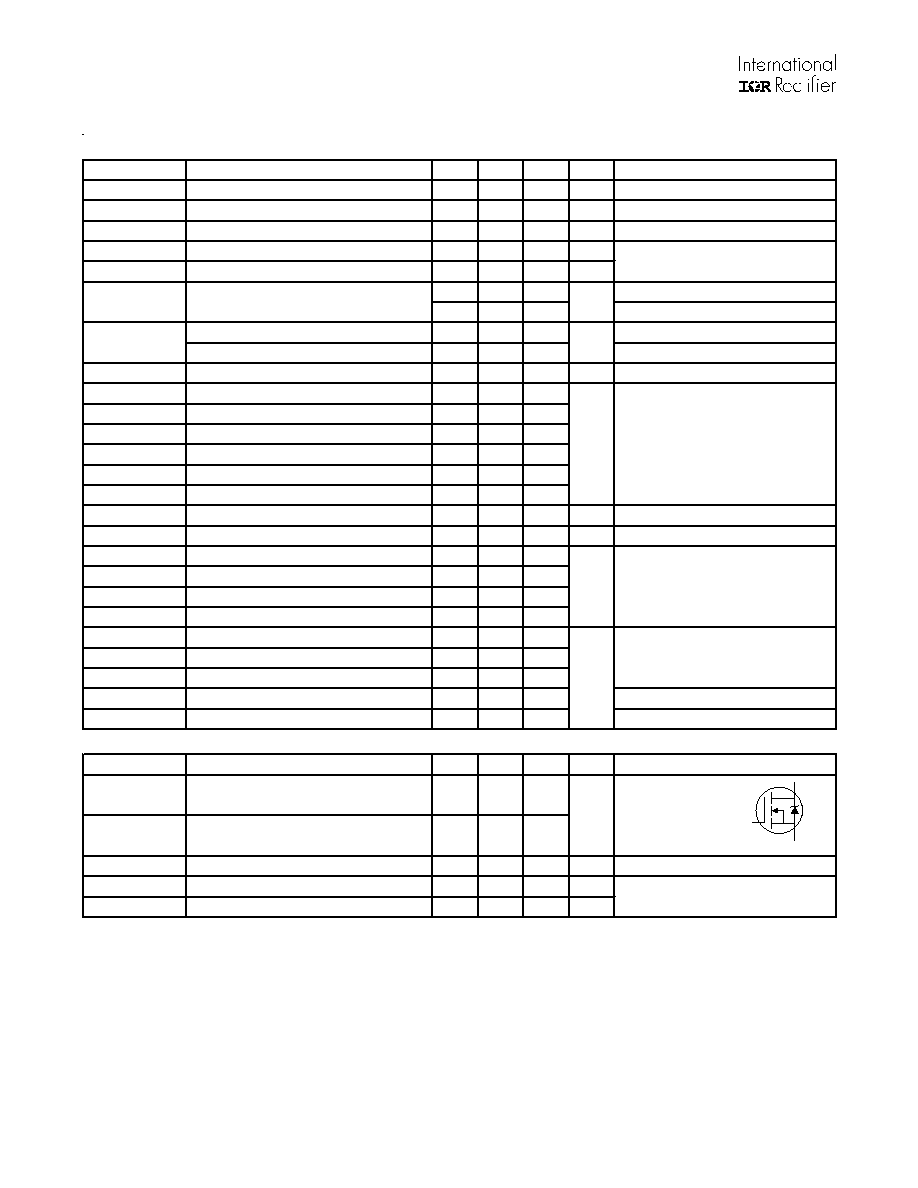
Absolute Maximum Ratings
Parameter
Units
V
DS
Drain-to-Source Voltage
V
V
GS
Gate-to-Source Voltage
I
D
@ T
A
= 25°C
Continuous Drain Current, V
GS
@ 10V
h
I
D
@ T
A
= 70°C
Continuous Drain Current, V
GS
@ 10V
h
A
I
D
@ T
C
= 25°C
Continuous Drain Current, V
GS
@ 10V
k
I
DM
Pulsed Drain Current
e
E
AS
Single Pulse Avalanche Energy
f
mJ
I
AR
Avalanche Current
Ãe
A
11
Max.
3.4
19
34
±20
100
4.2
5.0
SH
PD - 96926D
IRF6655
2
www.irf.com
Pulse width
400µs; duty cycle 2%.
Notes:
S
D
G
Static @ T
J
= 25°C (unless otherwise specified)
Parameter
Min. Typ. Max. Units
BV
DSS
Drain-to-Source Breakdown Voltage
100
V
V
DSS
/
T
J
Breakdown Voltage Temp. Coefficient
0.12
V/°C
R
DS(on)
Static Drain-to-Source On-Resistance
53
62
m
V
GS(th)
Gate Threshold Voltage
2.8
4.8
V
V
GS(th)
/
T
J
Gate Threshold Voltage Coefficient
-11
mV/°C
I
DSS
Drain-to-Source Leakage Current
20
µA
250
I
GSS
Gate-to-Source Forward Leakage
100
nA
Gate-to-Source Reverse Leakage
-100
gfs
Forward Transconductance
6.6
S
Q
g
Total Gate Charge
8.7
11.7
Q
gs1
Pre-Vth Gate-to-Source Charge
2.1
Q
gs2
Post-Vth Gate-to-Source Charge
0.58
nC
Q
gd
Gate-to-Drain Charge
2.8
4.2
Q
godr
Gate Charge Overdrive
3.2
See Fig. 17
Q
sw
Switch Charge (Q
gs2
+ Q
gd
)
3.4
Q
oss
Output Charge
4.5
nC
R
G
Gate Resistance
1.9
2.9
t
d(on)
Turn-On Delay Time
7.4
t
r
Rise Time
2.8
t
d(off)
Turn-Off Delay Time
14
ns
t
f
Fall Time
4.3
C
iss
Input Capacitance
530
C
oss
Output Capacitance
110
pF
C
rss
Reverse Transfer Capacitance
29
C
oss
Output Capacitance
510
C
oss
Output Capacitance
67
Diode Characteristics
Parameter
Min. Typ. Max. Units
I
S
Continuous Source Current
38
(Body Diode)
A
I
SM
Pulsed Source Current
34
(Body Diode)
e
V
SD
Diode Forward Voltage
1.3
V
t
rr
Reverse Recovery Time
31
47
ns
Q
rr
Reverse Recovery Charge
37
56
nC
MOSFET symbol
R
G
=6.0
V
DS
= 25V
Conditions
V
GS
= 0V, V
DS
= 80V, f=1.0MHz
V
GS
= 0V, V
DS
= 1.0V, f=1.0MHz
V
DS
= 16V, V
GS
= 0V
V
DD
= 50V, V
GS
= 10V
g
V
GS
= 0V
= 1.0MHz
I
D
= 5.0A
V
DS
= V
GS
, I
D
= 25µA
V
DS
= 100V, V
GS
= 0V
Conditions
V
GS
= 0V, I
D
= 250µA
Reference to 25°C, I
D
= 1mA
V
GS
= 10V, I
D
= 5.0A
g
T
J
= 25°C, I
F
= 5.0A, V
DD
= 25V
di/dt = 100A/µs
g
T
J
= 25°C, I
S
= 5.0A, V
GS
= 0V
g
showing the
integral reverse
p-n junction diode.
I
D
= 5.0A
V
DS
= 80V, V
GS
= 0V, T
J
= 125°C
V
GS
= 20V
V
GS
= -20V
V
GS
= 10V
V
DS
= 10V, I
D
= 5.0A
V
DS
= 50V
IRF6655
www.irf.com
3
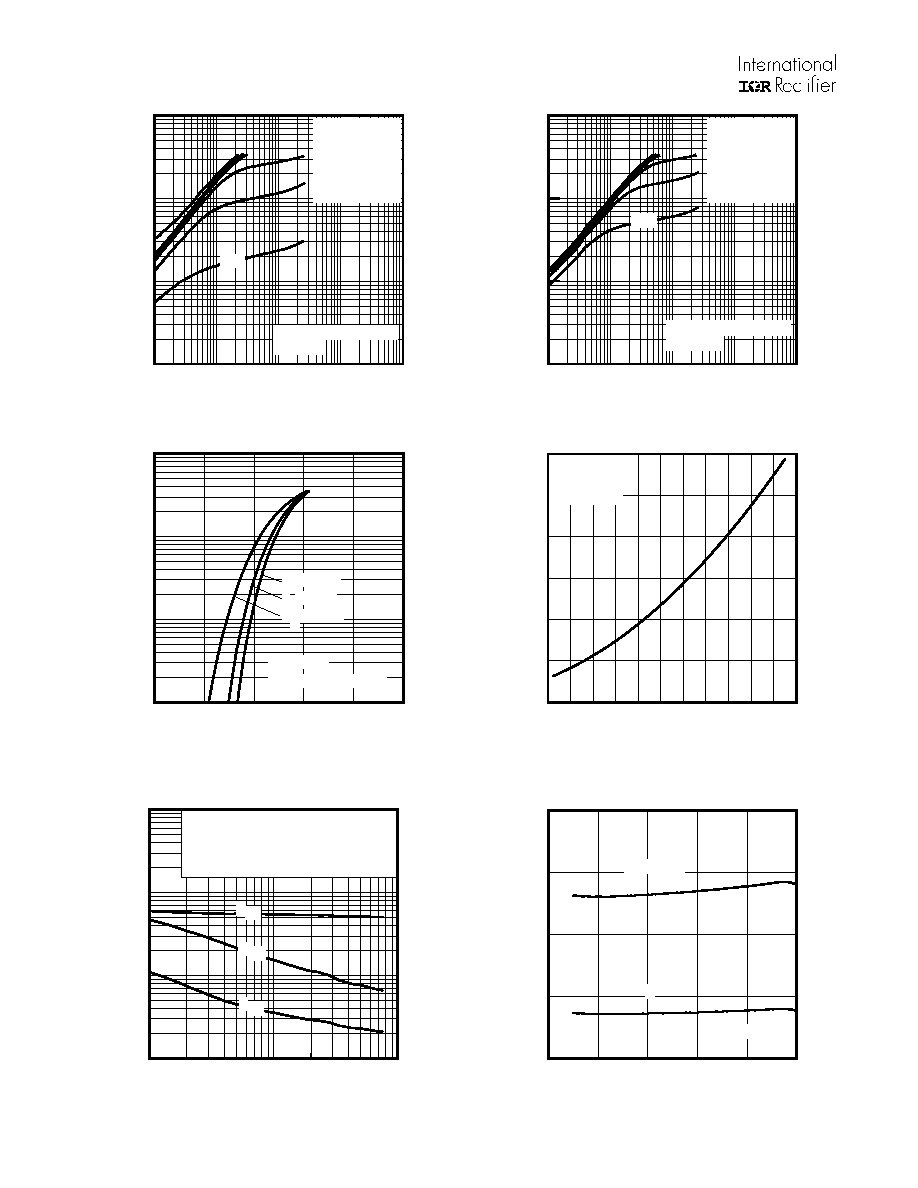
Fig 3. Maximum Effective Transient Thermal Impedance, Junction-to-Ambient
Surface mounted on 1 in. square Cu board, steady state.
Used double sided cooling , mounting pad.
Mounted on minimum footprint full size board with metalized
back and with small clip heatsink.
Notes:
T
C
measured with thermocouple incontact with top (Drain) of part.
R
is measured at
T
J
of approximately 90°C.
Surface mounted on 1 in. square Cu
board (still air).
Mounted on minimum
footprint full size board with
metalized back and with small
clip heatsink (still air)
Mounted to a PCB with a
thin gap filler and heat sink.
(still air)
1E-006
1E-005
0.0001
0.001
0.01
0.1
1
10
100
t1 , Rectangular Pulse Duration (sec)
0.01
0.1
1
10
100
T
h
e
r
m
a
l
R
e
s
p
o
n
s
e
(
Z
t
h
J
A
)
0.20
0.10
D = 0.50
0.02
0.01
0.05
SINGLE PULSE
( THERMAL RESPONSE )
Notes:
1. Duty Factor D = t1/t2
2. Peak Tj = P dm x Zthja + Tc
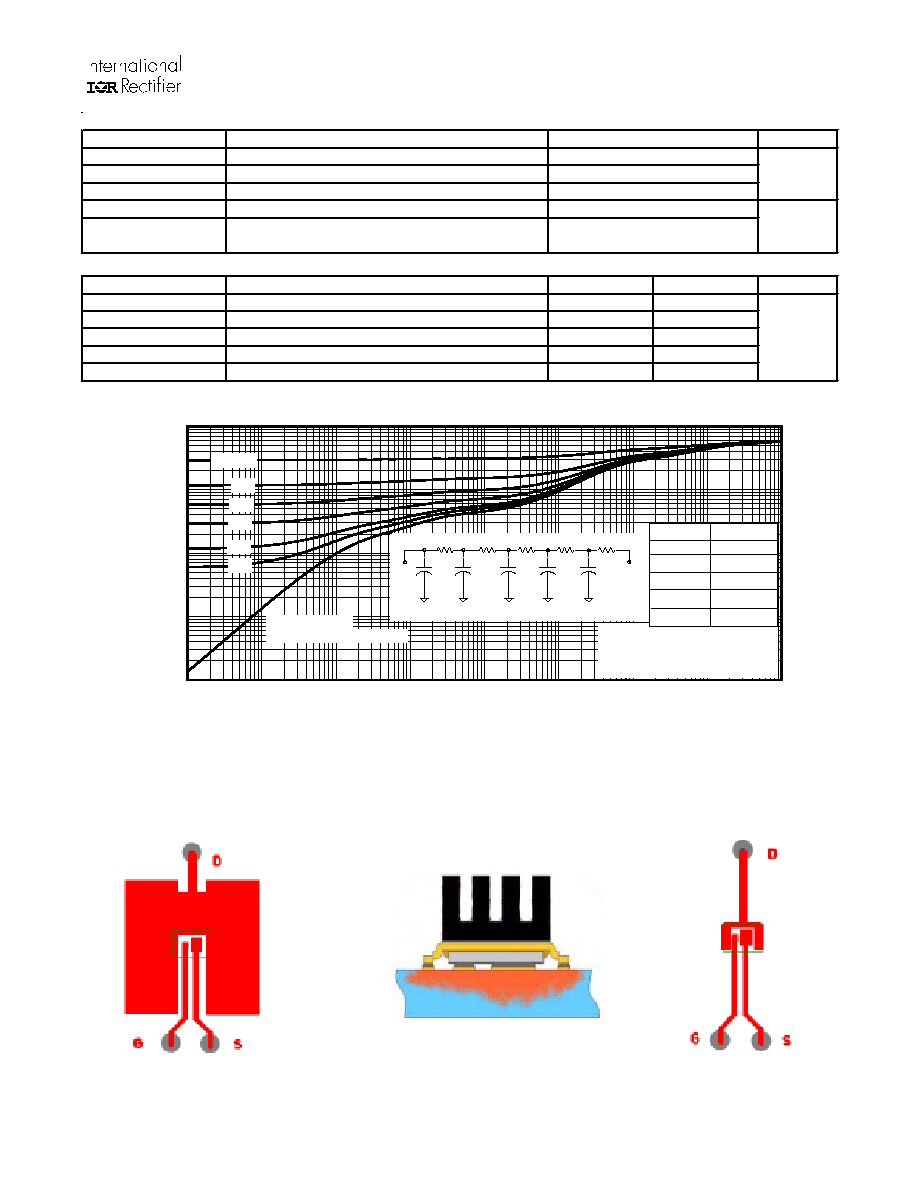
Absolute Maximum Ratings
Parameter
Units
P
D
@T
A
= 25°C
Power Dissipation
h
W
P
D
@T
A
= 70°C
Power Dissipation
h
P
D
@T
C
= 25°C
Power Dissipation
k
T
P
Peak Soldering Temperature
°C
T
J
Operating Junction and
T
STG
Storage Temperature Range
Thermal Resistance
Parameter
Typ.
Max.
Units
R
JA
Junction-to-Ambient
hl
58
R
JA
Junction-to-Ambient
il
12.5
R
JA
Junction-to-Ambient
jl
20
°C/W
R
JC
Junction-to-Case
kl
3.0
R
J-PCB
Junction-to-PCB Mounted
1.4
2.2
1.4
270
-40 to + 150
Max.
42
Ri (°C/W)
i (sec)
1.6195 0.000126
2.1406 0.001354
22.2887 0.375850
20.0457 7.410000
11.9144 99
J
J
1
1
2
2
3
3
R
1
R
1
R
2
R
2
R
3
R
3
Ci=
i/Ri
Ci=
i/Ri
4
4
R
4
R
4
A
A
5
5
R
5
R
5
IRF6655
4
www.irf.com
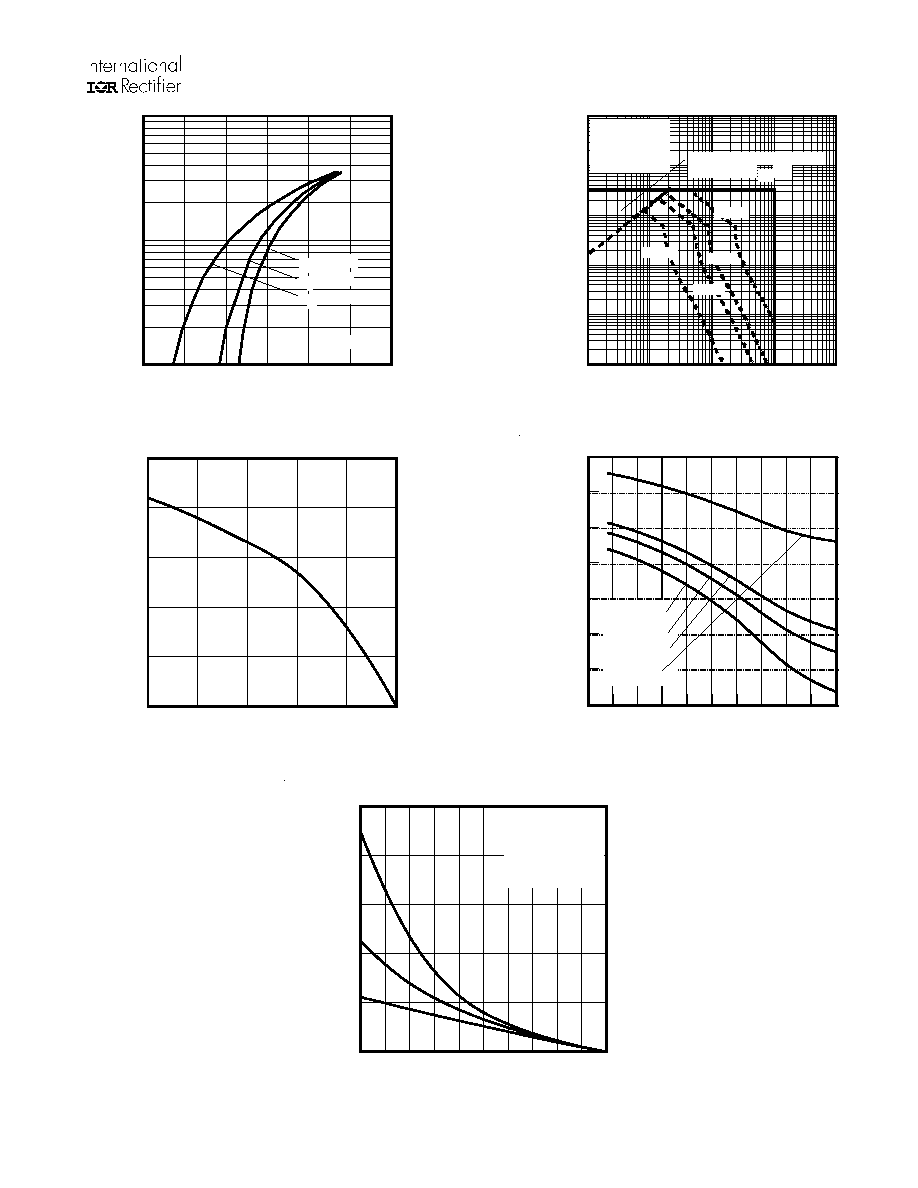
Fig 5. Typical Output Characteristics
Fig 4. Typical Output Characteristics
Fig 6. Typical Transfer Characteristics
Fig 7. Normalized On-Resistance vs. Temperature
Fig 8. Typical Capacitance vs. Drain-to-Source Voltage
Fig 9. Normalized Typical On-Resistance vs.
Drain Current and Gate Voltage
0.1
1
10
100
1000
VDS, Drain-to-Source Voltage (V)
0.1
1
10
100
I D
,
D
r
a
i
n
-
t
o
-
S
o
u
r
c
e
C
u
r
r
e
n
t
(
A
)
VGS
TOP 15V
10V
9.0V
8.0V
7.0V
BOTTOM
6.0V
60µs PULSE WIDTH
Tj = 25°C
6.0V
0.1
1
10
100
1000
VDS, Drain-to-Source Voltage (V)
0.1
1
10
100
I D
,
D
r
a
i
n
-
t
o
-
S
o
u
r
c
e
C
u
r
r
e
n
t
(
A
)
6.0V
60µs PULSE WIDTH
Tj = 150°C
VGS
TOP 15V
10V
9.0V
8.0V
7.0V
BOTTOM
6.0V
2
4
6
8
10
12
VGS, Gate-to-Source Voltage (V)
0.1
1
10
100
I D
,
D
r
a
i
n
-
t
o
-
S
o
u
r
c
e
C
u
r
r
e
n
t
(
)
TJ = -40°C
TJ = 25°C
TJ = 150°C
VDS = 25V
60µs PULSE WIDTH
-60 -40 -20 0 20 40 60 80 100 120 140 160
TJ , Junction Temperature (°C)
0.5
1.0
1.5
2.0
T
y
p
i
c
a
l
R
D
S
(
o
n
)
,
(
N
o
r
m
a
l
i
z
e
d
)
ID = 5.0A
VGS = 10V
1
10
100
VDS, Drain-to-Source Voltage (V)
10
100
1000
10000
C
,
C
a
p
a
c
i
t
a
n
c
e
(
p
F
)
VGS = 0V, f = 1 MHZ
Ciss = Cgs + Cgd, C ds SHORTED
Crss = Cgd
Coss = Cds + Cgd
Coss
Crss
Ciss
0
2
4
6
8
10
ID, Drain Current (A)
40
60
80
100
120
R
D
S
(
o
n
)
,
D
r
a
i
n
-
t
o
-
S
o
u
r
c
e
O
n
R
e
s
i
s
t
a
n
c
e
(m
)
TJ = 25°C
TJ = 125°C
Vgs = 10V
IRF6655
www.irf.com
5
Fig 10. Typical Source-Drain Diode Forward Voltage
Fig11. Maximum Safe Operating Area
0.4
0.6
0.8
1.0
1.2
1.4
1.6
VSD, Source-to-Drain Voltage (V)
1
10
100
I S
D
,
R
e
v
e
r
s
e
D
r
a
i
n
C
u
r
r
e
n
t
(
A
)
TJ = -40°C
TJ = 25°C
TJ = 150°C
VGS = 0V
Fig 12. Maximum Drain Current vs. Ambient Temperature
Fig 13. Threshold Voltage vs. Temperature
Fig 14. Maximum Avalanche Energy vs. Drain Current
25
50
75
100
125
150
Starting T J , Junction Temperature (°C)
0
10
20
30
40
50
E
A
S
,
S
i
n
g
l
e
P
u
l
s
e
A
v
a
l
a
n
c
h
e
E
n
e
r
g
y
(
m
J
)
ID
TOP 0.86A
1.3A
BOTTOM 5.0A
-75 -50 -25
0
25 50 75 100 125 150 175
TJ , Temperature ( °C )
2
2.5
3
3.5
4
4.5
5
5.5
T
y
p
i
c
a
l
V
G
S
(
t
h
) G
a
t
e
t
h
r
e
s
h
o
l
d
V
o
l
t
a
g
e
(
V
)
ID = 25µA
ID = 250µA
ID = 1.0mA
ID = 1.0A
0
1
10
100
1000
VDS, Drain-to-Source Voltage (V)
0.01
0.1
1
10
100
1000
I D
,
D
r
a
i
n
-
t
o
-
S
o
u
r
c
e
C
u
r
r
e
n
t
(
A
)
OPERATION IN THIS AREA
LIMITED BY R DS(on)
Tc = 25°C
Tj = 175°C
Single Pulse
100µsec
1msec
10msec
100msec
25
50
75
100
125
150
TA , Ambient Temperature (°C)
0
1
2
3
4
5
I D
,
D
r
a
i
n
C
u
r
r
e
n
t
(
A
)